
Bong Percolators Explained: Types, Drag and Which Perc to Choose
· 6 min read
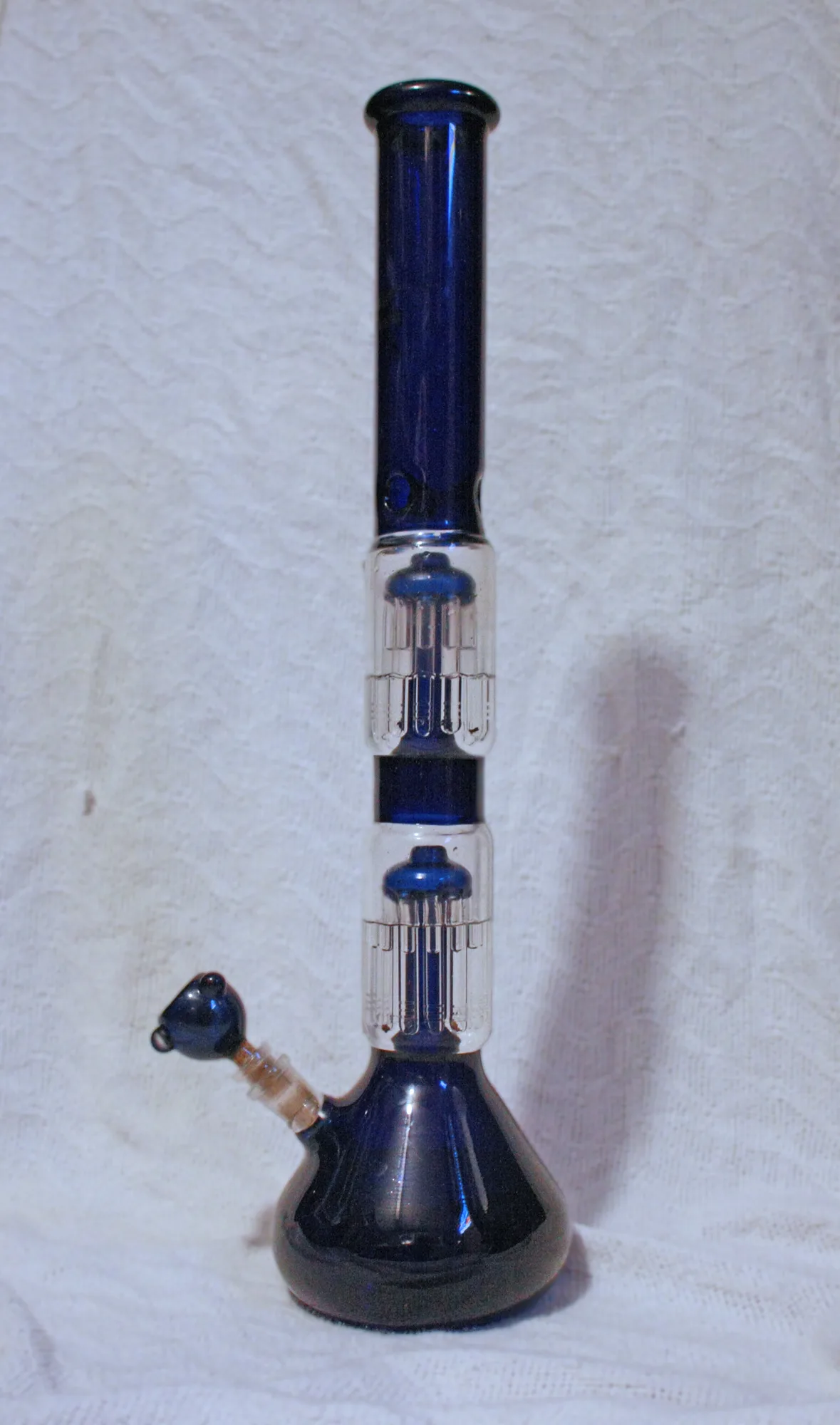
A percolator (perc) is the extra piece of glass inside a bong that splits smoke into many small bubbles before it reaches your mouth. Percs are the main reason two bongs of the same size can feel completely different to hit. This guide explains how they work, compares the common types, and covers the trade-offs nobody puts on the box: drag, cleaning time and fragility.
How a percolator works
Every water bong has at least one filtration stage: the downstem carries smoke under the water, and it bubbles up through the chamber. A percolator adds another stage, or replaces a plain downstem with something that breaks the smoke up more finely.
The idea is surface area. One big bubble has little contact with the water around it; dozens of small bubbles have far more. More contact means the smoke is cooled more before you inhale it, which is why percolated hits usually feel smoother. A perc does not make smoke "clean" or "safe"; it changes temperature and feel, not what you're inhaling.
Diffusion vs drag
Two words come up in every perc discussion:
- Diffusion: how finely the perc splits the smoke. More, smaller bubbles = more diffusion.
- Drag: how hard you have to pull to move air through the piece. Every slit, hole and extra chamber adds some resistance.
The two pull against each other. A design that diffuses aggressively usually adds drag, and stacking percs adds drag at every stage. Past two percs, most people notice the extra pull and cleaning time more than any extra smoothness. A well-made single perc often hits better than a cheap triple-perc piece.
Common percolator types compared
| Perc | What it looks like | Diffusion | Drag | Cleaning |
|---|---|---|---|---|
| Diffused downstem | Downstem with slits or holes at the tip | Low–medium | Low | Easy |
| Inline | Horizontal tube with slits along the bottom | Medium | Low | Easy |
| Showerhead | Vertical tube with a slotted, flared base | Medium–high | Low–medium | Easy |
| Honeycomb | Flat disc drilled with many small holes | High | Low–medium | Medium (holes clog) |
| Tree | Several thin arms hanging from a central tube | High | Medium | Hard, and fragile |
| Matrix | Cylinder with slits or holes on every side | Very high | Medium–high | Hard |
| UFO / pyramid / dome | A cap or dome that smoke has to go around | Medium | Low–medium | Medium |
Diffused downstem
Not technically a perc, but it does the same job at small scale. If your bong has a plain open-ended downstem, a slitted one is the cheapest upgrade in smoothness.
Inline
A horizontal tube across the base, with slits facing down. Big, fast bubbles, very little drag, and nothing delicate sticking out. Often used as the first stage in a two-perc build.
Showerhead
A vertical tube that ends in a flared, slotted head, like a shower. It's the most practical all-rounder: solid diffusion, easy to clean, and forgiving if your water level is a little off. The LA Pipes 14" Double Showerhead Perc Beaker stacks two of them in the neck, and the LA Pipes 24" Triple Showerhead Perc Beaker goes to three.
Honeycomb
A flat disc full of small holes, set across the tube. The smoke has to split through all of them at once, which gives a dense wall of fine bubbles with only modest drag. The catch is that small holes clog quickly if you let resin build up. Example: our Honeycomb Perc Beaker Bong 12".
Tree
A cluster of thin arms, each slit at the bottom, hanging from a central tube. Great diffusion and very satisfying to watch, but the arms are the most fragile glass in any bong and the hardest part to clean. Thick glass matters most on tree builds. Example: the Prism Pipes 20" Spaced Out Tree Perc Beaker, which breaks down into sections for cleaning.
Matrix
A cylinder cut with slits or holes all around, so bubbles leave in every direction. It's one of the heaviest-diffusing designs, with drag and cleaning effort to match. You'll often see matrix percs in add-ons, such as the Chill Matrix Perc Ash Catcher.
UFO, pyramid and dome percs
These put a cap or shape in the smoke's path, forcing it to spread out and around. They're usually low-drag and look striking in big pieces. Examples: the Daze Glass 22" Double UFO Perc Bong and the Prism Pipes Pyramid Perc Beaker.
Do you actually need a percolator?
Not necessarily. A percolator is worth it if harsh hits bother you or you like a big, cool pull. Skip it, or keep it to one, if you:
- want a piece that's quick to clean and hard to break,
- prefer a fast, open pull with almost no resistance,
- travel with your bong or tend to knock things over.
A plain straight tube with a diffused downstem and an ice catcher, like the Kushina Straight Tube Ice Bong 14", already gives you cooling without delicate internal glass. If you want to add a perc stage to a bong you already own, an ash catcher with a perc is the simplest route; our ash catchers and downstems guide explains how to match the joint size and angle.
Getting the water level right
Percs only work if they're under water, but too much water causes splashback and extra drag.
- Fill the base until the downstem slits are covered by about an inch (2–3 cm).
- For a perc in the neck, add water through the mouthpiece until the perc's slits or holes are just covered.
- Take a test pull without lighting anything. If water reaches the mouthpiece, pour a little out. If you hear one big gurgle instead of a fizz, add a little.
Keeping percs clean
Resin builds up in slits and holes first, and a clogged perc means more drag and worse flavor. Change the water often (daily if you use the bong daily) and give the piece a full soak with an alcohol-based cleaner, such as our Glass Pipe & Bong Cleaner 16 oz, when you see a film forming. Our glass pipe and bong cleaning guide walks through the soak-and-shake method step by step.
New to bongs in general? Start with types of bongs explained, or browse every style in bongs.
FAQ
What does a percolator do in a bong?
It splits smoke into many small bubbles so more of it touches the water. That cools the smoke and makes the hit feel smoother than a plain downstem alone.
Which percolator is best for beginners?
A showerhead or a single honeycomb is a good place to start. Both diffuse well, don't add much drag and are reasonably easy to clean.
Are more percolators always better?
No. Each extra perc adds drag and cleaning time. After two stages, most people notice the extra pull more than any extra smoothness.
Why is my percolator bong hard to pull?
Usually the water is too high, or the perc's holes and slits are clogged with resin. Pour out a little water first, and if that doesn't help, give the piece a full clean.
How much water goes in a percolator bong?
Enough to cover the downstem slits by about an inch, and enough in each perc chamber to just cover its slits or holes. Test with a dry pull and adjust if water splashes up.
Adults 21+. Educational content, not legal or medical advice. Accessories are sold for legal use with tobacco or legal herbs. Local laws on accessories differ by country and state; check yours before ordering.
— The Shop Kushina Team
Ready to order?
Browse the full menu or THCA flower. Questions? Call or text (507) 323-2528.
More guides
Follow Shop Kushina on Google